
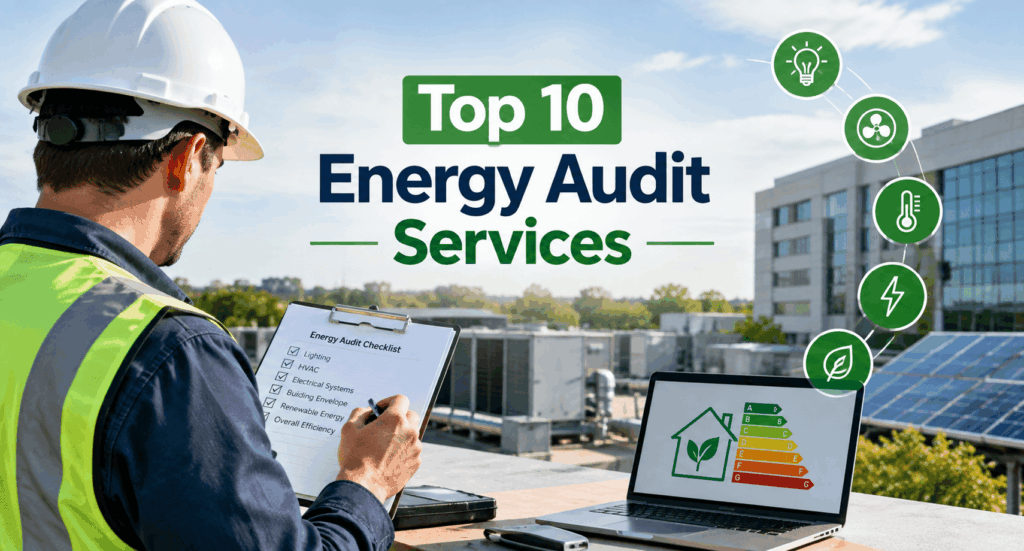
Energy costs are becoming an important concern for businesses, industries, commercial buildings, hospitals, hotels, apartments, schools, and other facilities across Chennai. Whether you operate a manufacturing unit in Ambattur, an office in OMR, a warehouse near Sriperumbudur, a hospital in the city, or an apartment community in South Chennai, electricity consumption can have a significant impact on your monthly operating expenses.
Many organisations know that their electricity bill is high, but they do not always know exactly where the energy is being wasted. A higher bill does not necessarily mean that a business simply needs to reduce its usage. Sometimes the real issue is inefficient equipment, poor load management, power-quality problems, inefficient air-conditioning, lighting losses, compressed-air leakage, thermal losses, or equipment that continues consuming energy when it is not required.
This is where an energy audit becomes valuable.
An energy audit is a systematic assessment of how energy is being purchased, distributed and consumed within a facility. The objective is not simply to produce a report. A useful audit should help identify practical opportunities to reduce energy consumption, control demand, improve equipment performance and understand the financial return of potential improvements.
For Chennai businesses, this can be particularly relevant because cooling, HVAC, electrical systems, production equipment and other energy-intensive operations can represent substantial operating costs.
KinetiQ Energy, a Chennai-based energy solutions company, provides energy auditing services covering areas such as electrical systems, thermal systems, lighting and HVAC, and solar feasibility. Its stated approach is to combine energy assessment with practical recommendations, ROI analysis and an implementation roadmap.
So, what are the major types of energy audit services available today?
1. Electrical Energy Audit
An electrical energy audit examines how electricity enters, moves through and is consumed within a facility.
For a Chennai factory, office, hospital, hotel or commercial building, this can involve studying transformers, electrical panels, motors, cables, distribution systems, power factor, demand patterns and major electrical loads.
The auditor may analyse electricity bills and load profiles while also taking measurements at important points in the electrical network. The objective is to understand where electrical losses or unnecessary consumption may be occurring.
For example, a facility may have equipment that operates during peak-demand periods even though its operation could be shifted to another time. Another facility may have inefficient motors, inappropriate cable sizing or power-factor issues.
KinetiQ Energy’s electrical audit services include load profiling and demand management, cable and loss assessment, transformer and panel efficiency checks, as well as power-factor and harmonic analysis. (kinetiqenergy.com)
For Chennai industries where electricity demand is closely connected to production schedules, understanding the load profile can be an important starting point.
2. Power Quality Audit
Not every energy problem appears directly on an electricity bill.
Poor power quality can affect equipment performance and reliability. Harmonics, voltage fluctuations, unbalanced loads and poor power factor can create additional losses and operational problems.
A power-quality audit uses measurement equipment to understand the characteristics of the electrical supply and the behaviour of connected loads.
This can be especially relevant for facilities using variable-frequency drives, automation systems, data equipment, CNC machinery, medical equipment and other sensitive electrical systems.
KinetiQ Energy identifies harmonic analysis, power-factor variation, load imbalance and cable-related issues as part of its audit approach before recommending power-conditioning solutions. (kinetiqenergy.com)
Instead of immediately purchasing an electrical correction system, a proper audit can help a facility understand what problem actually exists and what solution is technically appropriate.
3. HVAC and Cooling Energy Audit
In Chennai’s warm and humid climate, air-conditioning can be a major contributor to electricity consumption, particularly in offices, hospitals, hotels, shopping spaces, IT facilities and commercial buildings.
An HVAC energy audit examines the performance and operating conditions of cooling systems. Depending on the facility, this can include chillers, air-handling units, pumps, cooling towers, ventilation systems, thermostats and other related equipment.
The audit may examine operating temperatures, equipment loading, runtime, maintenance conditions and control strategies.
Sometimes the solution is not replacing the entire cooling system. Better scheduling, temperature management, variable-frequency drives, improved controls, preventive maintenance or correcting airflow problems may produce meaningful improvements.
KinetiQ Energy lists lighting and HVAC auditing among its energy-audit services and specifically includes VFD retrofits and AHU and chiller efficiency checks. (kinetiqenergy.com)
For Chennai businesses, this type of audit can be particularly useful when electricity consumption rises sharply during hotter months.
4. Lighting Energy Audit
Lighting may appear to be a relatively small part of a facility’s energy consumption, but large offices, factories, warehouses, retail stores, hospitals and apartment common areas can have hundreds or thousands of lighting points.
A lighting audit evaluates the type of lighting equipment being used, operating hours, illumination levels, control systems and opportunities for improvement.
The goal is not simply to replace every existing light with an LED.
A good audit should first determine whether the existing illumination is appropriate for the task. Over-lighting can waste electricity, while under-lighting can affect workplace comfort and productivity.
Occupancy sensors, daylight controls, better switching arrangements, efficient LED fixtures and improved operating schedules may all form part of an energy-efficiency plan.
KinetiQ Energy includes lux-level optimisation within its lighting and HVAC audit scope. (kinetiqenergy.com)
For warehouses and industrial facilities around Chennai, lighting audits can also examine whether lights are being operated in areas that are unoccupied for long periods.
5. Thermal Energy Audit
Thermal energy is particularly important for industries using boilers, furnaces, ovens, dryers, hot-water systems or steam networks.
A thermal energy audit examines how heat is generated, transferred and used.
For example, heat can be lost through poorly insulated pipes, inefficient boilers, leaking steam systems, incorrect operating conditions or poorly maintained equipment.
A thermal audit may involve checking temperatures, fuel consumption, combustion performance, insulation conditions and heat-transfer efficiency.
KinetiQ Energy’s thermal audit scope includes steam-line efficiency, insulation losses, boiler performance and hot-water systems. (kinetiqenergy.com)
For manufacturing companies in and around Chennai, such an audit can help connect fuel consumption with actual production output and identify areas where thermal energy is being unnecessarily lost.
6. Compressed-Air System Audit
Compressed air is widely used in manufacturing environments, but it can also be one of the more expensive utilities to produce.
A compressor may consume considerable electricity even when the compressed air is not being used efficiently.
Leaks are a common example. A small leak may seem insignificant, but multiple leaks across a production facility can create a continuous demand on the compressor.
A compressed-air audit can examine compressor loading and unloading, operating pressure, leakage, air demand, pressure drops, receiver capacity and system controls.
The objective is to determine whether the facility is producing more compressed air than necessary or operating the system at a higher pressure than required.
For Chennai’s manufacturing ecosystem, particularly engineering, automotive-component, fabrication and industrial facilities, compressed-air efficiency can be an important part of a broader energy-management programme.
7. Motor and Pump Energy Audit
Motors are at the heart of many industrial operations. They drive pumps, fans, compressors, conveyors, machine tools and other equipment.
A motor and pump audit looks at whether equipment is operating at an appropriate load and whether the system is consuming more electricity than necessary.
A pump that is oversized for its application, for example, may consume unnecessary energy. Similarly, a motor that operates continuously despite low production requirements may represent an opportunity for savings.
Variable-frequency drives can sometimes help control motor speed according to actual demand. However, the right solution depends on the equipment and application, which is why measurement and analysis should come before investment.
For Chennai industries, reviewing motor-driven systems can therefore be an important step toward reducing recurring energy costs without compromising production.
8. Building Energy Audit
A building energy audit takes a broader view of the entire facility.
Instead of examining only one machine or system, the auditor looks at the building as an interconnected energy system.
This may include lighting, HVAC, electrical distribution, lifts, pumps, ventilation, building controls, hot-water systems and other common-area loads.
For offices, hotels, hospitals, schools, shopping complexes and apartment communities, this approach can reveal how different systems interact.
For example, inefficient cooling may be linked to building-envelope conditions, operating schedules or excessive heat entering the building. Similarly, lighting and HVAC systems may both be operating unnecessarily during periods of low occupancy.
A building-level audit can therefore help facility managers prioritise improvements instead of making isolated equipment purchases.
9. Solar Energy and Renewable Energy Feasibility Audit
Many Chennai property owners and businesses are considering rooftop solar as electricity costs and sustainability requirements receive more attention.
But installing solar panels should ideally begin with understanding the site’s electricity consumption.
A solar feasibility assessment examines factors such as electricity consumption, available roof area, shading, orientation, system capacity, expected generation and financial returns.
The objective is to determine whether solar is technically and financially suitable for the facility.
KinetiQ Energy includes shadow and tilt analysis, PV yield simulation and ROI/payback calculations within its solar feasibility service.
This is important because the largest possible solar system is not automatically the best system for every building. The design should be connected to the customer’s actual load, site conditions and financial objectives.
10. Industrial Energy Audit and Energy Management
For an industrial facility, energy consumption is usually connected directly to production.
That means simply looking at the electricity bill may not tell the full story.
An industrial energy audit can connect energy consumption with production volumes and identify opportunities across electrical, mechanical, thermal and process systems.
The Bureau of Energy Efficiency (BEE) has established frameworks around certified energy auditors and energy managers, while certain energy-intensive industries fall under India’s designated-consumer and Perform, Achieve and Trade framework. BEE states that designated consumers in specified energy-intensive sectors are required to conduct mandatory energy audits under the applicable framework.
This makes it important for eligible industries to understand the applicable regulatory requirements rather than treating an energy audit only as a voluntary cost-saving exercise.
For large industrial facilities, an audit can also become the foundation for a longer-term energy-management strategy involving efficiency projects, renewable energy, storage, monitoring and ongoing measurement.
Why Energy Audits Matter for Chennai Businesses
Energy efficiency is not simply about switching off lights.
A modern energy audit looks at the complete picture: how much energy is consumed, where it is consumed, when it is consumed and whether that consumption is necessary for the required output.
For a Chennai business, the benefits can include better control over electricity expenses, improved equipment performance, reduced energy losses, better power quality, improved operational visibility and more informed investment decisions.
Tamil Nadu’s electricity system also represents a significant industrial energy market. The Tamil Nadu Climate Tracker reports industrial electricity consumption of 111,194 MU for FY 2022-23, highlighting the scale of energy use across the state’s industrial sector.
This is why energy efficiency should be approached as an operational and financial issue, not only an environmental one.
How to Choose an Energy Audit Company in Chennai
Choosing an energy audit provider should involve more than comparing the quoted audit fee.
First, check the auditor’s qualifications and relevant experience. BEE maintains information on accredited energy auditors and certified energy auditors, which can be useful when evaluating professional credentials.
Second, ask what the audit actually includes.
Will the team take measurements on-site? Will they analyse electricity bills and demand patterns? Will they examine power quality? Will they evaluate HVAC, lighting, thermal systems or motors? Will the final report quantify potential savings and investment requirements?
Third, look at the quality of the final recommendations.
A useful audit report should help management answer practical questions: What is the problem? How much energy could potentially be saved? What investment is required? What is the estimated payback? What should be implemented first? How will the savings be measured?
This is much more useful than a report containing only general suggestions such as “use energy-efficient equipment.”
Why KinetiQ Energy Can Be Considered for an Energy Audit in Chennai
KinetiQ Energy is based in Chennai and positions itself as an energy solutions company covering energy auditing, solar, battery energy storage, power-quality solutions and related energy services.
Its energy-auditing service covers electrical audits, thermal audits, lighting and HVAC assessments and solar feasibility studies. The company states that its audit process includes an on-site assessment followed by a detailed report containing findings, recommendations, ROI information and an implementation roadmap.
That broader approach can be useful when a business does not want an energy audit to end as a document sitting in a file.
For example, an organisation may discover through an audit that its biggest opportunity is not simply replacing equipment. The better solution could involve demand management, power-quality correction, HVAC optimisation, solar generation, battery storage or a combination of measures.
The important point is to identify the actual energy problem before investing in the solution.
What Should You Prepare Before an Energy Audit?
A facility can make an audit more productive by preparing basic information in advance.
Recent electricity bills are useful because they provide information about consumption and demand patterns. Equipment lists, operating schedules, production data, maintenance records and previous energy studies can also help auditors understand the facility.
It is equally useful to explain operational problems to the audit team.
If a factory experiences voltage issues, frequent equipment trips or unusually high peak demand, mention them. If an office struggles with high summer cooling costs, provide that information. If an apartment association wants to reduce common-area electricity consumption, explain which systems operate continuously.
The more accurately the auditor understands the facility, the more useful the resulting recommendations can become.