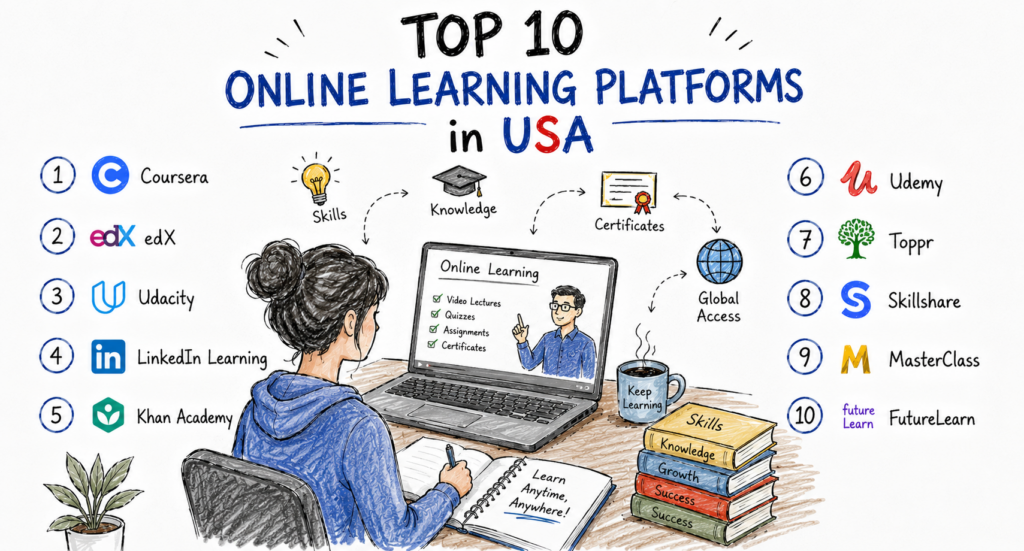
The way Americans learn has changed dramatically over the past decade. Online learning is no longer just an alternative to traditional education—it’s become one of the most effective ways to build new skills, earn industry-recognized certificates, prepare for career changes, and stay competitive in today’s fast-moving job market.
Whether you’re a college student looking to supplement your education, a working professional aiming for a promotion, an entrepreneur learning digital marketing, or someone exploring a new hobby, online learning platforms provide flexible access to thousands of courses taught by universities, industry experts, and leading organizations.
In the United States, employers increasingly value practical skills alongside formal education. Certifications in areas such as data analytics, artificial intelligence, cloud computing, cybersecurity, project management, digital marketing, software development, and business leadership can strengthen your resume and demonstrate continuous learning.
However, not every learning platform is the same. Some focus on university-level education, while others specialize in practical career skills, creative subjects, or professional certifications.
This guide reviews the **Top 10 Online Learning Platforms in the USA**, comparing their features, pricing, advantages, limitations, and ideal learners to help you choose the right platform for your goals.
How We Selected These Platforms
Our recommendations are based on several important factors:
Course quality
Reputation in the U.S.
Instructor expertise
Career relevance
Certificates and credentials
Learning experience
Mobile accessibility
Pricing and value
Course variety
Student satisfaction
Whether you’re learning for career advancement, personal development, or academic support, these platforms offer excellent educational opportunities.
1. Coursera
Best For
University-level education and professional certificates
Coursera is one of the most respected online learning platforms available today. It partners with leading universities and global companies—including institutions such as Stanford, Yale, Duke, Google, IBM, and Microsoft—to deliver high-quality educational content.
Learners can choose from thousands of courses, professional certificates, Specializations, bachelor’s degrees, and master’s degree programs. Many courses include quizzes, peer-reviewed assignments, hands-on projects, and shareable certificates that can strengthen a resume or LinkedIn profile.
Coursera is particularly valuable for professionals seeking recognized credentials in fields such as artificial intelligence, data science, cybersecurity, business management, project management, cloud computing, and digital marketing.
Key Features
University-backed courses
Professional Certificates
Guided Projects
Degree programs
Mobile learning
Downloadable lessons
AI and technology courses
Career pathways
Financial aid for eligible learners
Pros
High-quality instructors
Recognized certificates
Excellent technology and business courses
Flexible self-paced learning
Cons
Some certificates and degree programs can be expensive.
Advanced programs require a significant time commitment.
Pricing
Many courses can be audited for free.
Certificates and subscriptions vary depending on the program.
Ideal For
College students
Career changers
IT professionals
Business professionals
Data analysts
Software developers
2. Udemy
Best For
Affordable practical skill development
Udemy has one of the largest online course libraries in the world, covering everything from programming and business to photography, music, fitness, personal finance, and language learning.
Unlike university-based platforms, Udemy allows experienced instructors and industry professionals to publish courses, giving learners access to practical, job-focused content.
One of Udemy’s biggest strengths is frequent discounts, making many premium courses highly affordable.
Key Features
Over 250,000 courses
Lifetime course access
Downloadable resources
Practice quizzes
Coding exercises
Mobile app
Completion certificates
Pros
Huge course selection
Affordable pricing
Lifetime access
Excellent technology courses
Cons
Course quality can vary between instructors.
Certificates are generally not equivalent to university credentials.
Pricing
Individual course purchases
Frequent promotional discounts throughout the year
Ideal For
Beginners
Freelancers
Small business owners
Developers
Designers
Digital marketers
3. LinkedIn Learning
Best For
Professional development and workplace skills
LinkedIn Learning focuses on helping professionals improve workplace skills and advance their careers. Its course catalog includes leadership, communication, project management, business analysis, software development, design, productivity, and marketing.
Because it integrates with LinkedIn profiles, learners can showcase completed certificates directly to recruiters and employers.
The platform also provides personalized recommendations based on career interests and industry trends.
Key Features
Business courses
Leadership training
Technology learning paths
Creative skills
Personalized recommendations
Certificates of completion
LinkedIn profile integration
Offline viewing
Pros
Professional-quality instructors
Strong career focus
Excellent business content
Seamless LinkedIn integration
Cons
Smaller course library compared to Udemy.
Subscription required for continued access.
Pricing
Monthly subscription with free trial available.
Ideal For
Corporate employees
Managers
HR professionals
Job seekers
Entrepreneurs
4. edX
Best For
Academic learning and university education
Founded by Harvard University and MIT, edX offers university-level education from many of the world’s leading institutions.
Students can study computer science, engineering, business, healthcare, law, finance, mathematics, and many other disciplines.
The platform also provides MicroBachelors®, MicroMasters®, executive education, and professional certificate programs.
Key Features
University partnerships
Professional certificates
Degree pathways
Self-paced learning
Instructor-led programs
STEM education
Academic assessments
Pros
Prestigious university content
High academic standards
Excellent STEM courses
Career-oriented certificates
Cons
Some courses are academically demanding.
Verified certificates require payment.
Pricing
Many courses are free to audit.
Paid verified certificates vary by course.
Ideal For
University students
Engineers
Researchers
IT professionals
Graduate learners
5. Skillshare
Best For
Creative professionals and entrepreneurs
Skillshare specializes in creative education. Instead of traditional university courses, it focuses on hands-on learning for creative careers and hobbies.
Popular subjects include graphic design, illustration, animation, photography, filmmaking, writing, music production, productivity, branding, entrepreneurship, and social media marketing.
Many classes include practical projects that help learners apply new skills immediately.
Key Features
Creative classes
Project-based learning
Community discussions
Offline viewing
Personalized recommendations
Mobile app
New classes every week
Pros
Excellent creative content
Easy-to-follow lessons
Strong instructor community
Inspiring project-based approach
Cons
Limited university-level academic content.
Subscription required for unlimited access.
Pricing
Subscription-based membership with trial options.
Ideal For
Designers
Artists
Writers
YouTubers
Content creators
Entrepreneurs