
The history of Indian temple architecture is filled with remarkable achievements, but few dynasties have influenced South Indian architecture as profoundly as the Pallavas. Between the 4th and 9th centuries CE, the Pallava rulers transformed temple construction by introducing innovative architectural styles that laid the foundation for the magnificent Dravidian temples of later dynasties like the Cholas, Pandyas, and Vijayanagara Empire.
Today, the magnificent temples built by the Pallavas continue to attract historians, architects, pilgrims, tourists, students, and researchers from across the world. Their rock-cut caves, monolithic rathas, and structural stone temples showcase extraordinary engineering skills, artistic excellence, and deep religious devotion.
Whether you are preparing for competitive examinations, planning a heritage trip to Tamil Nadu, or simply fascinated by Indian history, understanding Pallava temple architecture provides valuable insights into India’s rich cultural heritage.
Who Were the Pallavas?
The Pallavas were one of the most influential dynasties in South India. They ruled large parts of present-day Tamil Nadu and Andhra Pradesh from approximately 275 CE to 897 CE.
Their capital was Kanchipuram, which became an important center of religion, education, literature, sculpture, and architecture.
Some of the most notable Pallava rulers include:
Simhavishnu
Mahendravarman I
Narasimhavarman I (Mamalla)
Paramesvaravarman I
Narasimhavarman II (Rajasimha)
Nandivarman II
Under these kings, temple architecture evolved dramatically.
Evolution of Pallava Temple Architecture
Historians generally divide Pallava temple architecture into four major phases.
1. Mahendra Style (600–630 CE)
King Mahendravarman I pioneered rock-cut cave temples.
Characteristics include:
Rock-cut cave shrines
Pillared halls
Simple sanctums
Minimal decoration
Lion-based pillars in later caves
Absence of large towers
Major examples include:
Mandagapattu Cave Temple
Mahendravadi Cave
Dalavanur Cave
Pallavaram Cave Temple
The famous Mandagapattu inscription proudly states that the temple was built without bricks, timber, metal, or mortar.
This marked the beginning of permanent stone temple construction in South India.
2. Mamalla Style (630–668 CE)
King Narasimhavarman I, popularly called Mamalla, expanded temple architecture significantly.
Major innovations included:
Monolithic temples
Rock-cut sculptures
Larger cave temples
Decorative pillars
Narrative relief sculptures
The famous monuments at Mahabalipuram belong mainly to this period.
3. Rajasimha Style (690–728 CE)
This period witnessed the transition from rock-cut architecture to structural stone temples.
Important features include:
Fully built stone temples
Multi-storeyed vimanas
Rich carvings
Circumambulatory paths
Decorative sculptures
Sandstone construction
The Kailasanatha Temple at Kanchipuram represents the peak of this style.
4. Nandivarman Style (731–796 CE)
Temple construction became more refined.
Characteristics include:
Larger complexes
Better proportion
Increased ornamentation
Development of enclosed courtyards
Improved tower designs
The Vaikuntha Perumal Temple represents this architectural phase.
Types of Pallava Temples
Rock-Cut Cave Temples
These were carved directly into hills or rocky surfaces.
Features:
Pillared entrance
Central sanctum
Sculptured walls
Lion pillars
Shiva and Vishnu shrines
Advantages included durability and artistic flexibility.
Monolithic Rathas
The famous Pancha Rathas are carved from single granite rocks.
Each ratha resembles a temple but was carved from one enormous boulder.
They served as architectural experiments rather than active places of worship.
Structural Temples
Instead of carving mountains, Pallava architects began assembling cut stone blocks.
This revolutionary development influenced all later South Indian temple construction.
Characteristics of Pallava Temple Architecture
1. Vimana
Unlike later temples with towering gopurams, Pallava temples emphasized beautifully designed vimanas above the sanctum.
The vimanas were:
Pyramid shaped
Multi-tiered
Decorated with sculptures
Well proportioned
2. Mandapa
Mandapas served as assembly halls for devotees.
Types include:
Ardha Mandapa
Maha Mandapa
Mukha Mandapa
These halls often feature beautifully carved pillars.
3. Pillars
Pallava pillars are among their most recognizable architectural elements.
Features include:
Lion bases
Square shafts
Octagonal sections
Decorative capitals
The lion pillar became an iconic Pallava symbol.
4. Sculptures
Temple walls display magnificent sculptures depicting:
Shiva
Vishnu
Durga
Ganesha
Kartikeya
Nandi
Celestial beings
Mythological stories
These sculptures reflect both artistic excellence and religious devotion.
5. Somaskanda Panel
Many Pallava Shiva temples include a Somaskanda panel behind the main deity.
It portrays:
Shiva
Parvati
Child Skanda (Murugan)
This became a distinctive feature of Pallava temples.
Mahabalipuram: The Jewel of Pallava Architecture
No discussion of Pallava architecture is complete without Mahabalipuram.
This ancient port city became an open-air museum of stone architecture.
Major monuments include:
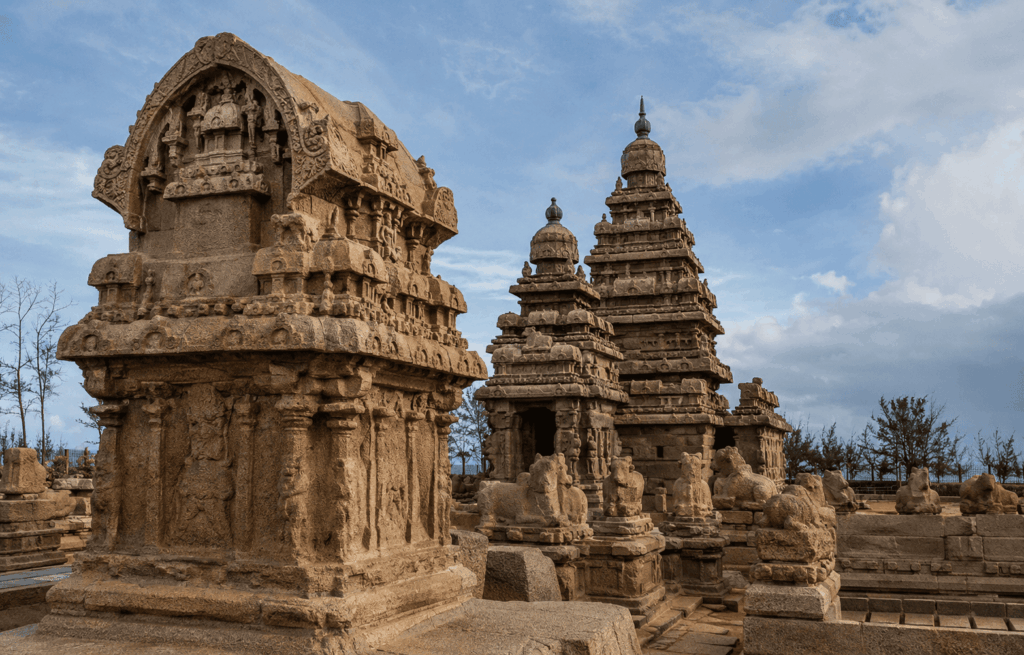
Shore Temple
Built by Narasimhavarman II.
Highlights:
Overlooks the Bay of Bengal
One of India’s earliest structural temples
Dedicated mainly to Shiva
UNESCO World Heritage Site
Pancha Rathas
Five monolithic temples named after the Pandavas.
They include:
Dharmaraja Ratha
Bhima Ratha
Arjuna Ratha
Nakula-Sahadeva Ratha
Draupadi Ratha
Each demonstrates different architectural concepts.
Arjuna’s Penance
One of the world’s largest open-air rock reliefs.
It depicts:
Gods
Animals
Sages
River Ganga
Mythological scenes
The detailed carvings remain an engineering marvel.
Cave Temples
Important cave temples include:
Varaha Cave
Mahishasuramardini Cave
Krishna Cave
Trimurti Cave
Each showcases advanced sculptural techniques.
Kailasanatha Temple, Kanchipuram
The Kailasanatha Temple is regarded as the masterpiece of Pallava structural architecture.
Highlights include:
Built by Narasimhavarman II
Dedicated to Lord Shiva
Sandstone construction
Numerous subsidiary shrines
Rich sculptures
Excellent preservation
Architects consider it a prototype for later Chola temples.
Vaikuntha Perumal Temple
This temple represents mature Pallava architecture.
Features include:
Dedicated to Lord Vishnu
Multiple sanctums
Historical inscriptions
Sculptures narrating Pallava history
Multi-level design
It also provides valuable historical information through its inscriptions.
Religious Importance
The Pallavas supported multiple religions.
Their temples were dedicated to:
Shiva
Vishnu
Durga
Murugan
Jain Tirthankaras
Religious harmony was a defining characteristic of their rule.
Construction Techniques
Pallava builders demonstrated remarkable engineering skills.
They used:
Granite
Sandstone
Stone joints without cement
Precision carving
Balanced load distribution
Many temples have survived earthquakes, cyclones, and centuries of weathering.
Artistic Excellence
Temple walls portray:
Dancing Shiva
Battle scenes
Animals
Floral motifs
Mythological stories
Royal processions
Celestial musicians
Every sculpture combines religious symbolism with artistic beauty.
Influence on Later Dynasties
The Pallavas laid the foundation for later South Indian temple architecture.
Cholas
The Cholas expanded Pallava ideas into larger temples like the Brihadeeswarar Temple.
Pandyas
They adopted elaborate vimanas and mandapas.
Vijayanagara Empire
Their temple complexes with grand halls evolved from Pallava innovations.
UNESCO Recognition
The Group of Monuments at Mahabalipuram is recognized as a UNESCO World Heritage Site.
The site includes:
Shore Temple
Pancha Rathas
Rock-cut caves
Open-air relief sculptures
It attracts visitors from around the globe and highlights India’s rich architectural heritage.
Why Pallava Architecture Matters Today
Pallava temples are more than ancient monuments.
They serve as:
Centers of worship
Tourist attractions
Archaeological treasures
Educational resources
Symbols of Tamil culture
Inspirations for modern architects
Students of architecture study their design principles even today.
Travel Tips for Visitors
If you plan to explore Pallava architecture:
Visit Mahabalipuram during winter (October–February).
Spend at least one full day exploring the monuments.
Wear comfortable footwear.
Carry water and sun protection.
Hire a certified guide for historical insights.
Respect temple customs and preserve the monuments.